Matcha Latte Cost at Home vs. the Café: The Honest Math
By Jordan, Green Hour Matcha
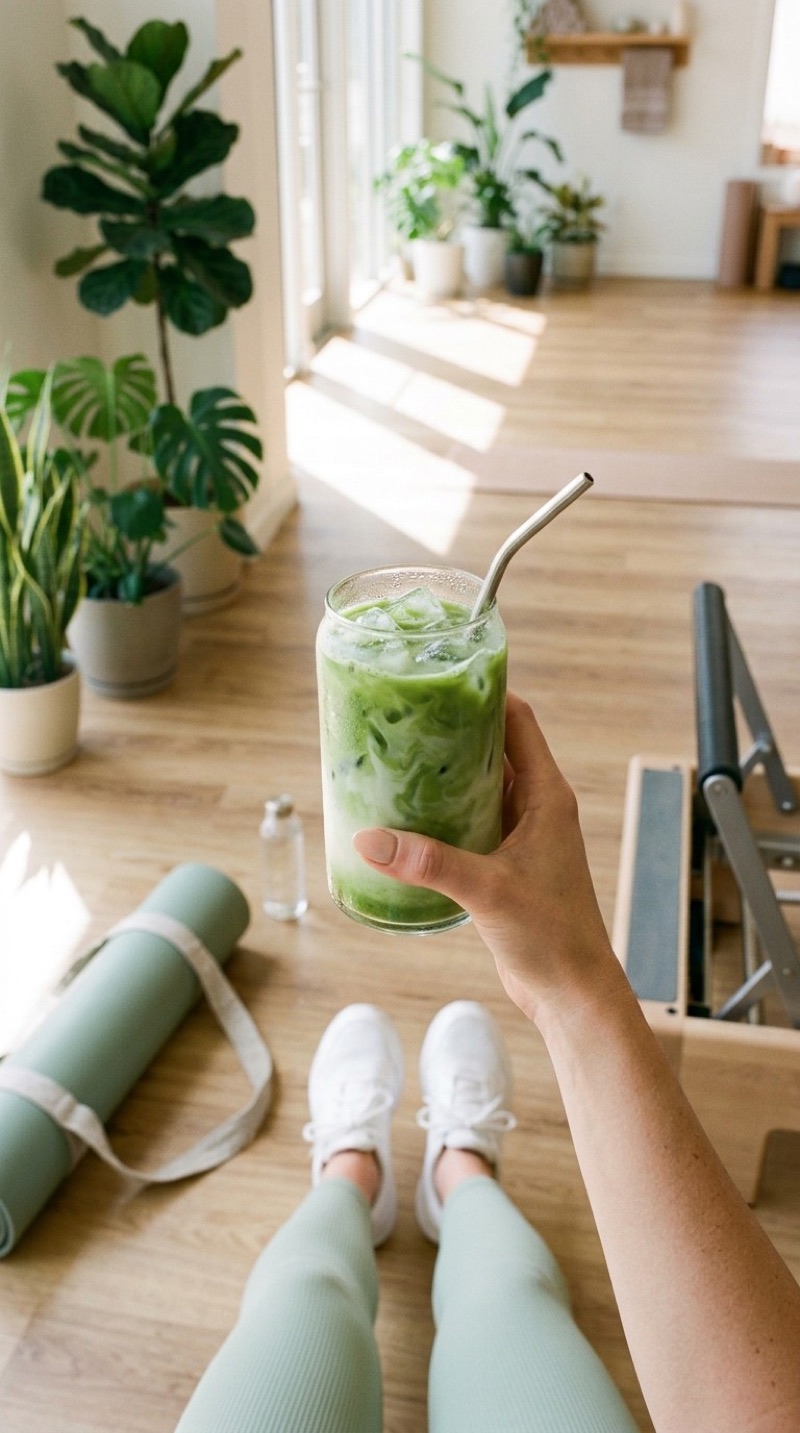
The short version: an iced matcha latte costs about $5 to $8 at a café, before the tip. Made at home, the same glass costs about $1.50 to $2.50, depending on your matcha, your milk and the size of your scoop. At five lattes a week, that's a difference of roughly $900 to $1,600 a year.
Below is the math, line by line, with real prices checked in October 2026, so you can redo it with your own. Plus what the home number leaves out, because a fair comparison has two sides.
What a matcha latte costs at the café
Prices move with the city, the size and the shop, but in 2026 they look roughly like this:
- Big coffee chains: about $5.25 to $6.80 for a 16 oz iced matcha latte, depending on the city.
- Specialty matcha and coffee shops: often $7 to $8, and more in parts of New York and Los Angeles.
- Extras: a flavored syrup or a cold foam adds to the bill, some shops still charge more for oat milk, and the tip screen is waiting for you either way.
What's in your glass at home
One iced latte, made the way we do it in our iced matcha latte recipe:
- 2 g of matcha (1 level teaspoon), or 3 g for a bolder glass
- 2 oz (60 ml) of water at 175°F (80°C)
- 6 oz (180 ml) of cold milk
- 1 to 2 teaspoons of sweetener, if you like it sweet
- A glass full of ice
Here's what each line costs.
Matcha: the biggest line
Divide the price of the tin by its grams. That price per gram is the most important number here. Take a mid-range latte matcha at about 63 cents a gram:
- 2 g for a regular latte: about $1.26
- 3 g for a bold one: about $1.89
Milk: about 20 to 55 cents
- Oat milk: a half-gallon (64 oz) of a popular barista-style brand runs about $5 to $6 at a big grocery chain, so 6 oz costs roughly 45 to 55 cents. Store brands often cost less.
- Dairy milk: the US average for a gallon of whole milk was about $4.23 in August 2026, so 6 oz comes to about 20 cents.
Sweetener: from a penny to a quarter
- Sugar or homemade brown sugar syrup: about a penny a glass.
- Pure maple syrup: roughly 50 to 80 cents an ounce at the store, so 1 to 2 teaspoons is about 10 to 25 cents.
Ice and water
Basically free. Your freezer does the work.
Café vs. home, glass by glass
| Your iced matcha latte | Per glass (approx.) | 5 a week for a year |
|---|---|---|
| Specialty café | $7 to $8, plus tip | $1,820 to $2,080 |
| Big coffee chain | $5.25 to $6.80, plus tip | $1,365 to $1,770 |
| Home: 3 g matcha, oat milk, 1 tsp maple | about $2.50 | about $650 |
| Home: 2 g matcha, oat milk, 1 tsp maple | about $1.90 | about $495 |
| Home: 2 g matcha, whole milk, 1 tsp sugar | about $1.50 | about $390 |
A year here means 260 glasses. The home rows use a mid-range latte matcha at about 63 cents a gram. The café rows are menu prices, before the tip.
What the home number leaves out
To be fair to the café:
- The upfront cost. You pay for the whole tin at once, often the price of three to five café lattes.
- Tools. A jar with a lid is enough. A bamboo whisk or a small electric frother is a one-time buy, usually under $30.
- Size. A café cup is often 16 oz, ice included. Our recipe is 8 oz of liquid over ice, which fills a 12 to 16 oz glass. Want it bigger? Add milk, not matcha: 2 more oz of oat milk costs under 20 cents.
- Your time. About two minutes, sifting included.
- The café part. The music, the barista who knows your order. Your kitchen has no line. Call it even.
Tin size changes the math
Small tins hide a high price per gram, and many tins hold just 20 to 40 g. Two quick formulas:
- Price ÷ grams = your price per gram
- Grams ÷ 2 = how many 2 g lattes you get
Example prices, just to show the math:
- A 20 g tin at $30: $1.50 a gram, so $3 of matcha in every latte, and 10 lattes per tin.
- A 30 g tin at $30: $1 a gram, $2 per latte, 15 lattes.
- A 40 g tin at $25: about 63 cents a gram, about $1.25 per latte, 20 lattes.
- A 100 g bag of baking-grade matcha at $25: 25 cents a gram, but it's made for baking and usually tastes harsher in a glass.
A low price per gram only pays off if you finish the tin before it fades.
Five ways to make it cheaper
- Level the teaspoon. A heaping scoop holds a lot more than 2 g.
- Stay at 2 g and add a splash of milk for a bigger glass.
- Make your own syrup. Dissolve two tablespoons of brown sugar in two tablespoons of hot water. About a penny a glass.
- Buy milk in half-gallons, not single-serve cartons.
- Store it well. Lid tight, somewhere cool and dark. Stale matcha is the most expensive kind, because it ends up down the sink. Here's why old matcha tastes like grass.
And ours?
Green Hour matcha isn't on sale yet, and we haven't set a price. When we do, we'll show the price per gram right next to it, so you can run this math yourself. Join the list to hear first.
FAQ
How much does a matcha latte cost to make at home?
About $1.50 to $2.50 a glass: roughly $1.26 to $1.89 of matcha (2 to 3 g at about 63 cents a gram), 20 to 55 cents of milk, and about 10 cents of maple or a penny of sugar. Small, pricier tins can push it past $3.
Why are café matcha lattes so expensive?
You're paying for rent, staff, cups and the seat, not only the drink. Matcha also got pricier: the leaf used to make it more than doubled in price at Japanese tea auctions between 2024 and 2026.
How many lattes are in a tin of matcha?
Divide the grams by your scoop. At 2 g, a 20 g tin makes 10, a 30 g tin 15 and a 40 g tin 20. At 3 g: about 6, 10 and 13.
Do I need special equipment to save money?
No. Shake 2 g of matcha with about 7 oz (200 ml) of cold water in a jar for 20 to 30 seconds, then pour it over ice and milk. A whisk is nice to have, not required.