Why Does My Matcha Taste Like Grass? (And How to Fix It)
By Jordan, Green Hour Matcha
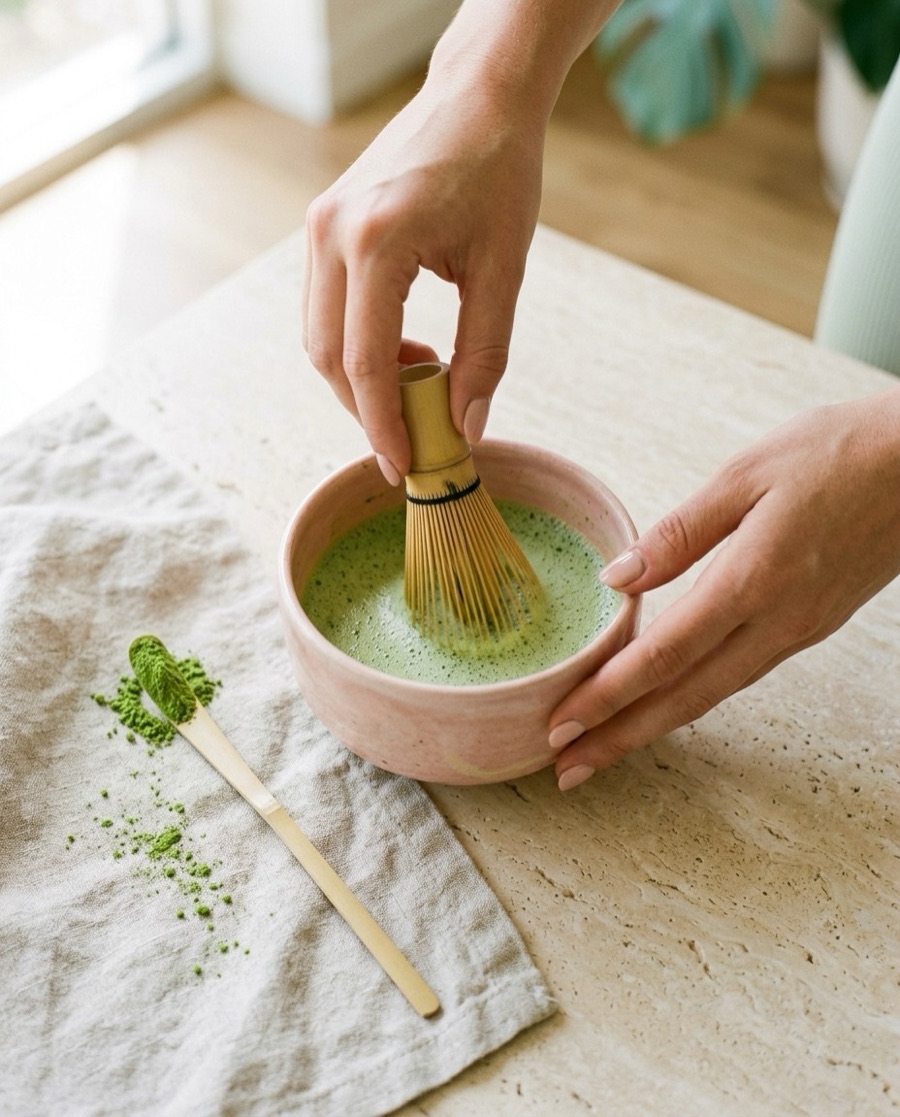
The short version: when matcha tastes like lawn clippings, it's almost always one of three things. The water was too hot, the scoop was too big, or the powder is old. Use water at 175°F (80°C), one level teaspoon (about 2 g), and a tin that's sealed tight and kept somewhere cool and dark.
Then make it a latte: cold milk and a spoonful of sweetener round off whatever green edge is left. Here are all seven fixes, in the order we'd try them.
Is matcha supposed to taste a little green?
A little, yes. Matcha is ground green tea leaves, so a fresh green note is part of the deal, the same way coffee tastes a bit roasted. But good matcha balances it with sweetness and a savory depth called umami.
What's not normal: a taste like cut grass, raw spinach or hay, a bitterness that grips your tongue, or a dry, puckering feel. That cup went wrong somewhere, and it's usually easy to fix.
1. Cool your water down
Boiling water is the number one cause. Very hot water pulls out more of the tea's bitter, astringent side and flattens its sweetness, so all you taste is sharp and green.
- Use water at 175°F (80°C).
- No thermometer? Boil the kettle, then wait about two minutes.
- Or skip hot water entirely and use the jar method below.
2. Use less powder (and level the scoop)
Too much matcha in too little liquid tastes intensely green. A heaping teaspoon holds a lot more than a level one, so level it off with the back of a knife.
For one glass: 2 g of matcha (1 level teaspoon), 2 oz (60 ml) of water and 6 oz (180 ml) of milk. Still too strong? Use a slightly scant teaspoon next time. You can always add more.
3. Check how fresh your matcha is
Matcha doesn't spoil quickly, but it fades once it's open. Air, light, heat and humidity dull its color and its sweetness, and what's left tastes flat, hay-like and bitter.
Signs your matcha is past its best:
- The color has gone olive or yellowish.
- It smells like hay, or like nothing.
- It used to taste fine, and now it doesn't, with the same recipe.
How to store it:
- Close the lid tightly, every time, and use a dry spoon.
- Keep it cool and dark, away from the stove, the coffee machine and sunny windows.
- In the fridge? Let the closed tin warm to room temperature before opening it, so no condensation forms inside.
- Try to finish it within about a month of opening. At one 2 g latte a day, a 20 to 40 g tin lasts 10 to 20 days anyway.
4. Mix it all the way
Undissolved specks of matcha are tiny bursts of concentrated, bitter green. If you've ever hit a clump at the bottom of the glass, you know.
- Sift the powder through a small sieve first.
- Start with only the 2 oz of water, not the whole glass.
- Whisk fast in a W or M shape for 15 to 20 seconds, or use a small electric frother for about 10.
5. Pick a creamier milk
Milk is the easiest way to soften the green. The creamier and slightly sweeter the milk, the rounder the latte.
| Milk | How much it softens the green |
|---|---|
| Oat | A lot. Creamy and a little sweet: the best place to start. |
| Coconut | Quite a bit, with a sweet, tropical note. |
| Whole milk | Some. Rich and round, but it lets more of the matcha through than oat. |
| Soy | Some. Thick, with its own beany note. |
| Almond | Not much. It's light, so the matcha comes through. |
More milk also helps. If 6 oz still tastes too green, try 7 or 8.
6. Add a little sweetness, in the milk
Sweetness takes the edge off bitterness. You don't need much: 1 to 2 teaspoons of maple, vanilla syrup or brown sugar syrup. Stir it into the cold milk, not into the matcha, so it actually dissolves. Using honey? Dissolve it in a splash of warm water first.
An optional trick: a tiny pinch of salt in the milk. You won't taste the salt, but it can make the bitterness less noticeable.
7. Try the jar method
Cold water gives a gentler, rounder cup than hot, so this is the method for anyone who thinks she doesn't like matcha. No kettle, no whisk:
- Put 2 g of matcha in a small jar with a tight lid.
- Add about 7 oz (200 ml) of cold water.
- Close it and shake hard for 20 to 30 seconds.
- Pour it over ice and cold oat milk.
Still tastes like grass? It might be the matcha
Fixed the water, the dose, the storage and the milk, and it's still harsh? Look at the powder. Later-harvest and baking-grade matcha are naturally stronger and more astringent: great in cookies, less so in a glass. Powdered green tea sold as matcha tastes sharper still. Here's how to tell if matcha is good.
Quick fixes
| Your cup tastes... | Most likely cause | Try this |
|---|---|---|
| Like cut grass, sharp | Water too hot | 175°F, or the cold jar method |
| Intense and bitter | Too much powder | 1 level tsp (2 g), or a little less |
| Like hay, flat | Old or badly stored powder | A fresh tin, lid tight, cool and dark |
| Bitter in bursts | Clumps | Sift, then whisk in a W |
| Thin and very green | Light milk, or not enough | Oat milk, 6 to 8 oz |
| Harsh at the finish | No sweetness | 1 tsp of maple in the milk |
Which matcha for a smooth first glass
Start with a matcha that tastes good on its own, so the fixes above have less work to do. That's the bar we've set for the Green Hour matcha we're building (it's not on sale yet). Whatever you use, follow our iced matcha latte recipe, and keep the kettle off the boil.
FAQ
Why does café matcha taste less like grass than mine?
Most café lattes use more milk and more sweetener, and some cafés use a pre-sweetened matcha mix. At home, try 6 oz of oat milk and a teaspoon of maple, and make sure your water isn't boiling.
Can I fix a matcha that already tastes bitter?
Partly. Add more cold milk, a little sweetener and plenty of ice. Next time, cool the water to 175°F (80°C) and use a level teaspoon.
Does matcha go bad?
It doesn't spoil quickly, but it loses color, aroma and sweetness once it's open. Keep it sealed, cool and dark, and try to finish it within about a month. Faded, olive powder tastes flat and bitter.
Is iced or hot matcha smoother?
Iced, usually. Cold water and cold milk give a gentler, rounder taste than hot water. If matcha has never quite worked for you, start with the jar method.